
Wool vs Viscose Rugs: Which Material Is Better for Your Home?
Learn the difference between wool and viscose rugs, including feel, durability, cleaning, best rooms, pro tips and expert guidance for choosing the right rug.
6/16/202610 min read
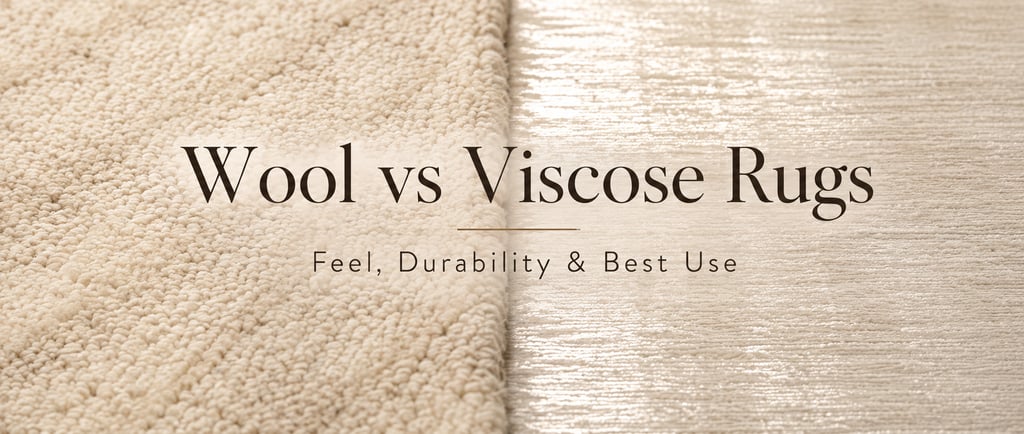
Wool vs Viscose Rugs: Which Material Is Better for Your Home?
Choosing the right rug is not only about colour, pattern or size. The material of the rug plays a major role in how it feels, how long it lasts, how easy it is to maintain and where it should be placed inside the home.
Two popular materials in handmade and luxury rugs are wool and viscose.
Wool is known for its natural strength, warmth and long-term performance. Viscose is known for its smooth surface, elegant shine and silk-like appearance.
Both materials can look beautiful, but they behave very differently in real homes.
This guide explains the difference between wool and viscose rugs in simple language, with practical tips, useful data points and expert guidance to help you choose the right rug for your space.
Quick Answer: Which Is Better?
If you want a rug for daily use, high foot traffic and long-term durability, wool is usually the better choice.
If you want a rug mainly for softness, shine and decorative luxury in a low-traffic space, viscose can be a good choice.
The best material depends on the room, lifestyle and purpose of the rug.
For example:
For a family living room, wool is usually more practical.
For a bedroom or formal sitting area, viscose can look very elegant.
For hotels, lounges and premium interiors, wool-viscose blends can create a balance of durability and shine.
A Short History of Wool and Viscose in Rugs
Wool has been used in rugs for thousands of years. Traditional rug-making regions used wool because it was naturally available, strong, warm and suitable for hand-knotting, hand-tufting and weaving.
Wool became one of the most trusted rug fibres because it could handle daily use while still giving comfort underfoot.
Viscose has a much shorter history. It was developed as a silk-like fibre in the late nineteenth and early twentieth centuries. It was often called “artificial silk” because it gave fabrics a smooth touch and a shiny appearance.
In rugs, viscose became popular because it could add a silk-like look at a more accessible price than natural silk. Today, viscose is often used in luxury-style rugs, either on its own or blended with wool to create contrast, shine and texture.
What Is a Wool Rug?
A wool rug is made from the fleece of sheep. The wool is cleaned, spun into yarn and then used to create rugs through different techniques such as hand-knotting, hand-tufting, handloom weaving or flatweave construction.
Wool is a natural fibre. It has a slightly springy structure, which helps it recover better from pressure and foot movement.
This is one reason wool rugs are widely used in homes, hotels and high-quality interior projects.
Key qualities of wool rugs
Natural and renewable fibre
Soft but strong underfoot
Good durability
Better resilience than many delicate fibres
Naturally warm and comfortable
Suitable for many rug constructions
Good for daily-use spaces
Ages well when properly maintained
What Is a Viscose Rug?
Viscose is a manufactured fibre made from plant-based cellulose. The cellulose often comes from wood pulp or similar plant sources.
The fibre is processed into a smooth yarn that can look shiny and feel soft, almost like silk.
In rugs, viscose is used to create:
A smooth surface
A soft hand-feel
A silk-like shine
Rich-looking colours
Highlight details in patterns
A luxurious visual effect
Viscose rugs can look beautiful, especially in rooms where the rug is more decorative than functional.
However, viscose is generally more delicate than wool and needs more careful placement and maintenance.
Data Point 1: Wool Is One of the Oldest Textile Fibres
Wool is one of the oldest fibres used in textiles and rug-making. It has been valued for centuries because it is natural, warm, flexible and strong.
In modern interiors, wool is still widely used because it combines comfort with practical performance.
This long history matters because it shows that wool is not just a decorative material. It has been tested through generations of use in real homes, palaces, nomadic settings, commercial spaces and hospitality interiors.
Data Point 2: Wool Is Renewable and Biodegradable
Wool comes from sheep, and sheep grow a new fleece regularly. This makes wool a renewable natural fibre.
Wool is also biodegradable under suitable conditions. This means it can naturally break down over time, unlike many synthetic fibres.
For homeowners who care about natural materials, this can be an important point.
However, sustainability also depends on the full production process, including farming, dyeing, washing, transport and the lifespan of the rug. A rug that lasts longer may reduce the need for frequent replacement.
Data Point 3: Viscose Gives Shine but Needs Careful Use
Viscose is loved for its shine. It can make a rug look more premium, polished and elegant.
But this shine comes with a trade-off.
Viscose fibres are generally more sensitive to moisture, pressure and heavy use. In busy spaces, a viscose rug may show flattening, marks or wear faster than wool.
This does not mean viscose is bad. It simply means it should be used in the right place.
Wool vs Viscose Rugs: Feel Underfoot
Both wool and viscose rugs can feel soft, but their softness is different.
Wool rug feel
Wool feels soft, warm and slightly springy. It has a natural body underfoot. When you walk on a wool rug, it usually feels more structured and cushioned.
A good wool rug does not feel flat or lifeless. It has a natural bounce.
This makes wool comfortable for living rooms, bedrooms, lounges and family spaces.
Viscose rug feel
Viscose feels smoother and silkier. It can feel cool and fine to the touch. When you move your hand across a viscose rug, the pile may change direction and create light and dark shading.
This gives viscose rugs a very elegant appearance.
However, viscose usually does not have the same natural bounce as wool.
Simple feel comparison
Wool feels more natural, warm and resilient.
Viscose feels smoother, silkier and shinier.
Wool vs Viscose Rugs: Durability
Durability is one of the biggest differences between wool and viscose.
Wool durability
Wool is generally more durable than viscose. Its natural crimp and elasticity help the fibres recover from pressure and movement.
This makes wool a strong option for:
Living rooms
Bedrooms
Family rooms
Hallways with moderate use
Hotels
Lounges
Long-term residential interiors
Wool rugs can last for many years when properly made and maintained.
Viscose durability
Viscose is more delicate. It can look beautiful when new, but it may need more careful handling.
Viscose rugs may show:
Pile flattening
Water marks
Shading changes
Furniture pressure marks
Wear in busy areas
More visible stains
For this reason, viscose is better for low-traffic spaces.
Simple durability comparison
For durability, wool is usually the safer and stronger choice.
For decorative shine, viscose has an advantage.
Wool vs Viscose Rugs: Cleaning and Maintenance
Maintenance is another important factor.
Wool rug care
Wool rugs are usually easier to live with than viscose rugs.
Basic care includes:
Vacuum regularly using a suitable setting
Rotate the rug every few months
Blot spills quickly
Avoid harsh chemicals
Use professional rug cleaning when required
Keep the rug dry and well-ventilated
Wool has natural soil-hiding properties, especially in textured or medium-toned designs. This makes it more practical for everyday use.
Viscose rug care
Viscose needs more careful cleaning.
Basic care includes:
Avoid placing it in moisture-prone areas
Blot spills immediately
Never rub aggressively
Avoid excess water
Use a soft vacuum setting
Avoid heavy furniture pressure
Use professional rug cleaning for stains
Viscose can react poorly to water, so home cleaning should be done very carefully.
Pro Tip
If the rug will be placed in a room where food, pets, children or frequent guests are involved, wool is usually a safer option than viscose.
Wool vs Viscose Rugs: Appearance
The appearance of both materials is different.
Wool appearance
Wool has a soft matte look. It feels natural and warm. It can hold rich colours beautifully, but it usually does not have the high shine of viscose.
Wool works well for:
Traditional rugs
Modern rugs
Textured rugs
Minimal rugs
Earthy interiors
Warm luxury spaces
Long-lasting family homes
Viscose appearance
Viscose has a smoother and shinier appearance. It can reflect light and create a luxury effect.
Viscose works well for:
Premium bedrooms
Formal living rooms
Decorative lounges
Boutique interiors
Low-traffic spaces
Rugs with highlighted patterns
Viscose can make a design look more glamorous, especially when used in carved patterns or contrast details.
Wool vs Viscose Rugs: Best Rooms for Each Material
Best places for wool rugs
Wool rugs are suitable for:
Living rooms
Bedrooms
Family rooms
Study rooms
Lounges
Moderate-traffic hallways
Hospitality spaces
Long-term residential projects
Wool is better when the rug needs to perform every day.
Best places for viscose rugs
Viscose rugs are suitable for:
Master bedrooms
Guest bedrooms
Formal sitting rooms
Private lounges
Dressing areas
Low-traffic luxury spaces
Decorative corners
Viscose is better when the rug is used mainly for style and visual impact.
Wool vs Viscose Rugs: Which Is Better for Indian Homes?
For most Indian homes, wool is usually the more practical choice.
Indian homes often deal with:
Dust
Foot traffic
Family use
Guests
Furniture movement
Seasonal humidity
Regular cleaning needs
Because of these conditions, wool usually performs better in daily-use areas.
Viscose can still be a beautiful choice, but it should be placed in more controlled areas, such as bedrooms or formal spaces.
Pro Tip for Indian homes
Use wool for the main living area and viscose or wool-viscose blends for spaces where you want extra shine and luxury.
This gives you both practicality and beauty.
Wool-Viscose Blended Rugs: A Balanced Option
Many modern luxury rugs use a blend of wool and viscose.
This is because each material adds something different.
Wool adds:
Strength
Body
Warmth
Resilience
Structure
Viscose adds:
Shine
Smoothness
Colour depth
Highlight effect
Luxury appearance
A wool-viscose rug can be a good option when you want a rug that is more visually refined than pure wool but more structured than pure viscose.
However, the performance depends on the percentage of each fibre and how the fibres are used in the design.
For example, a rug with wool as the base and viscose used only for pattern highlights may perform better than a rug made mostly from viscose.
Pro Tips Before Buying a Wool or Viscose Rug
Pro Tip 1: Ask where the rug will be used
Do not choose the material only by look.
First ask:
Is the room used daily?
Will children or pets use the space?
Will people eat or drink near the rug?
Is the room humid?
Will furniture sit heavily on the rug?
For high-use rooms, wool is usually better.
Pro Tip 2: Check the pile direction
Viscose rugs can look lighter or darker depending on the pile direction. Before buying, view the rug from different angles.
This helps you understand how it will look in your room.
Pro Tip 3: Do not judge softness alone
A very soft rug is not always the best rug.
Some delicate rugs feel beautiful at first but may not handle heavy use well.
Always balance softness with durability.
Pro Tip 4: Ask about fibre percentage
If a rug is described as a wool-viscose blend, ask how much wool and how much viscose it contains.
Also ask whether viscose is used in the full rug or only in design highlights.
This can affect both price and performance.
Pro Tip 5: Avoid viscose in moisture-prone areas
Do not place viscose rugs in bathrooms, kitchens, entryways or areas where spills are common.
Moisture can affect the look and feel of viscose.
Pro Tip 6: Use a rug pad
A rug pad can help reduce movement, improve comfort and protect the rug from extra wear.
This is useful for both wool and viscose rugs.
Pro Tip 7: Match the rug to your lifestyle
If you want a rug that can handle real daily life, choose wool.
If you want a rug that creates a soft, elegant and polished look in a quiet room, viscose can work beautifully.
Wool vs Viscose Rugs: Quick Comparison
FeatureWool RugsViscose RugsFeelSoft, warm and springySmooth, silky and coolAppearanceNatural, matte and richShiny, polished and elegantDurabilityBetter for regular useBetter for low-traffic useCleaningEasier to maintainNeeds more careful cleaningMoisture resistanceMore practical than viscoseSensitive to moistureBest roomsLiving room, bedroom, family roomMaster bedroom, formal lounge, dressing areaLong-term useStronger choiceMore delicate choiceLuxury effectNatural luxurySilk-like luxuryBest forDaily comfort and durabilityShine and decorative beauty
Common Mistakes Buyers Make
Mistake 1: Choosing viscose for a busy living room
Viscose may look beautiful in photos, but it may not be the best choice for a heavily used room.
Mistake 2: Thinking all shiny rugs are silk
Many shiny rugs are made from viscose, bamboo silk or blends. Always ask about the actual material.
Mistake 3: Ignoring maintenance
A rug is a long-term product. Cleaning and care should be considered before buying.
Mistake 4: Buying only by price
A cheaper rug may not always be more cost-effective if it wears out quickly. Material, construction and finishing are equally important.
Mistake 5: Not asking about construction
A wool rug can be hand-knotted, hand-tufted, handloom or flatwoven. Each construction behaves differently.
The same is true for viscose rugs.
Expert Recommendation
For most homes, especially active homes, wool is the more dependable material.
It offers a strong balance of comfort, durability and natural beauty.
Viscose is best when used thoughtfully. It is ideal when the main goal is elegance, sheen and a more decorative finish.
For many premium interiors, the best solution may be a wool-viscose blend, where wool gives strength and viscose adds a refined visual highlight.
The right choice depends on the room, usage and desired look.
Frequently Asked Questions
Is wool better than viscose for rugs?
For durability and daily use, wool is usually better than viscose. Wool has better natural resilience and is more suitable for regular foot traffic.
Is viscose softer than wool?
Viscose often feels smoother and silkier, while wool feels warmer, fuller and more springy. Both can feel soft, but in different ways.
Are viscose rugs durable?
Viscose rugs can be beautiful, but they are usually more delicate than wool rugs. They are best used in low-traffic areas.
Which rug material is best for a living room?
For most living rooms, wool is a better choice because it handles regular use more effectively.
Can wool and viscose be used together?
Yes. Wool-viscose blends are popular in modern rugs because they combine wool’s structure with viscose’s shine.
Which rug material is easier to clean?
Wool is generally easier to maintain than viscose. Viscose needs more careful handling, especially around water and stains.
Is viscose the same as silk?
No. Viscose is not natural silk. It is a manufactured fibre made from plant-based cellulose. It can look silk-like, but it is not the same as real silk.
References & Material Notes
This guide has been prepared using practical rug-making knowledge and publicly available textile guidance from recognised industry sources.
Wool is widely known as a natural, renewable and biodegradable fibre. It is also valued in rugs because of its resilience, comfort and long-term usability.
Viscose is a manufactured cellulose-based fibre. It is often used in rugs for its smooth texture, silk-like appearance and soft sheen.
Actual rug performance depends on several factors, including fibre quality, construction, pile height, pile density, finishing, placement, cleaning method and maintenance.
Final Thoughts
Wool and viscose both have their own place in rug design.
Wool is natural, strong, warm and practical. It is a better option for homes where the rug will be used every day.
Viscose is smooth, shiny and elegant. It is a good option for rooms where beauty and luxury appearance are more important than heavy use.
Before choosing between wool and viscose, think about the room first.
A rug should not only look good on the day it is installed. It should also perform well in the space where it will live.
At ACOI, rug materials are selected according to design direction, room usage, construction type and buyer requirements. Whether the project needs a durable wool rug, a refined viscose finish or a balanced wool-viscose blend, the right material choice begins with understanding how the rug will be used.


Write to us:
© 2026 ACOI, All rights reserved.
Quick Links
Follow Us On
Call us on:
acoi@acoi.in
+91 86790 90403