
Viscose vs Bamboo Silk Rugs: Feel, Durability and Key Differences
Learn the difference between Viscose vs bamboo silk rugs, including their softness, appearance, durability, care requirements and the best spaces for each material.
6/8/20267 min read
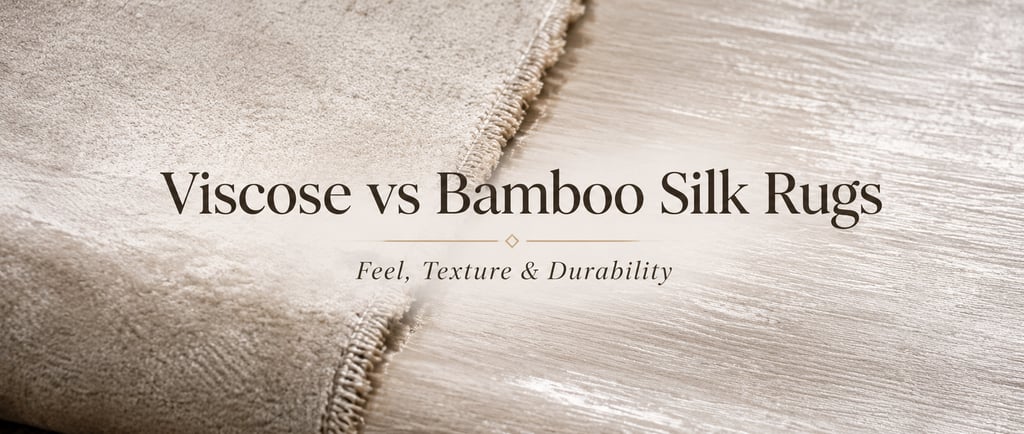
Viscose vs Bamboo Silk Rugs: What Is the Difference in Feel and Durability?
When choosing a rug for a home, hotel or interior project, the material matters just as much as the design. Two materials that often attract attention are viscose and bamboo silk.
Both materials are popular because they can give a rug a smooth texture, a soft feel and a beautiful shine. They can make colours look richer and add a refined finish to a room.
However, many buyers are unsure about the difference between them.
Is bamboo silk more durable than viscose?
Which rug feels softer underfoot?
Can these rugs be used in busy areas?
Are bamboo silk rugs made from real silk?
This guide explains the differences in simple terms so that you can choose the right rug for the right space.
A Short History: Why Were Silk-Like Fibres Developed?
For centuries, natural silk has been valued for its smooth texture and elegant shine. In rugs, silk can create fine detailing, depth and a luxurious appearance. However, natural silk is a premium material and requires skilled handling.
During the late nineteenth century, textile makers began developing fibres that could offer a silk-like appearance at a more accessible cost. Viscose was one of the most important results of this work.
Viscose was originally known as artificial silk because of its soft surface and gentle shine. Commercial production began in Britain in the early twentieth century.
Over time, the same basic idea was used with different plant sources. Bamboo later became one of these sources. This is why the term bamboo silk is now commonly used in the rug and home-furnishing industry.
What Is a Viscose Rug?
Viscose is a manufactured fibre made from plant-based cellulose. The cellulose often comes from wood pulp, although other plant sources can also be used.
The plant material is processed and turned into fine yarn. This yarn can then be used to create rugs with a soft, smooth and slightly shiny surface.
Viscose is often selected when a designer wants:
A silk-like appearance
A smooth texture
Rich-looking colours
A soft sheen that changes slightly with the light
A more accessible alternative to natural silk
Viscose rugs can look especially elegant in bedrooms, formal living rooms and carefully styled spaces.
What Is a Bamboo Silk Rug?
The name bamboo silk can be slightly confusing.
A bamboo silk rug is generally not made from natural silk. In most cases, the fibre is made by processing cellulose taken from bamboo plants. The result is usually a type of viscose or rayon made from bamboo.
The word “silk” is commonly used because the finished yarn can feel smooth and look glossy.
Bamboo silk rugs are often chosen for:
A fine and silky surface
A soft touch underfoot
A graceful shine
Detailed patterns
A polished and premium appearance
It is helpful to think of bamboo silk as a close relative of viscose rather than a completely separate material.
The Main Difference in Simple Words
The easiest way to understand the difference is this:
Viscose describes the type of fibre and manufacturing process. Bamboo silk usually describes a silk-like viscose fibre made using bamboo as the plant source.
This means the two materials can be very similar.
The final result depends on more than the material name. The quality of a rug also depends on:
The quality of the yarn
The thickness of the pile
The density of the rug
The weaving or tufting method
Whether the rug uses only one fibre or a blend
The amount of foot traffic in the room
How the rug is cleaned and maintained
A well-made rug should always be judged by its complete construction, not only by the name of the fibre.
Which Material Feels Softer?
Both viscose and bamboo silk rugs can feel soft and smooth underfoot.
The Feel of Viscose Rugs
Viscose rugs usually have a gentle, silky surface. They may feel soft, cool and smooth when touched by hand. Their pile can also catch the light from different angles, creating a subtle change in shade.
This effect gives a viscose rug a refined and elegant appearance.
The Feel of Bamboo Silk Rugs
Bamboo silk rugs often feel especially smooth and fine. Depending on the yarn and the construction, they may have a slightly more polished surface and a stronger sheen.
In practical terms, the difference can be small. A high-quality viscose rug may feel softer than a lower-quality bamboo silk rug. Similarly, a carefully made bamboo silk rug may feel finer than a basic viscose rug.
Simple Conclusion on Feel
If softness and shine are your priorities, both materials can be suitable.
Bamboo silk is often selected when the design requires a more polished and luxurious look. Viscose is also an excellent option when the goal is to create a silk-like appearance while keeping the rug more accessible.
Which Material Is More Durable?
This is where buyers should be careful.
Neither viscose nor bamboo silk should be chosen mainly for heavy-duty use. Both fibres are generally more delicate than wool.
Because bamboo silk is often a type of bamboo-derived viscose, it is not automatically stronger or longer-lasting than standard viscose.
Durability of Viscose Rugs
Viscose rugs can maintain their appearance well when placed in suitable areas and cared for properly. However, the fibres may flatten, develop marks or show wear if the rug is placed in a busy area.
Heavy furniture can also leave impressions on the surface.
Durability of Bamboo Silk Rugs
Bamboo silk rugs should also be treated with care. Their smooth fibres and fine surface make them visually attractive, but they may show signs of wear if used in areas with constant movement.
The term “bamboo silk” should not be understood as a guarantee of extra durability.
Simple Conclusion on Durability
For durability, the difference between viscose and bamboo silk is often not very large.
A more important question is:
Where will the rug be placed?
Where Should Viscose and Bamboo Silk Rugs Be Used?
These rugs are best used in spaces where visual impact is more important than heavy everyday use.
Suitable Areas
Viscose and bamboo silk rugs can work well in:
Bedrooms
Formal living rooms
Guest rooms
Dressing areas
Private lounges
Low-traffic seating areas
Luxury residential spaces
Carefully managed hospitality interiors
Areas to Avoid
Extra care is required before placing these rugs in:
Entryways
Busy hallways
Dining areas with frequent spills
Children’s playrooms
Kitchens
Areas used by pets
Spaces exposed to moisture
Rooms where furniture is moved regularly
For a busy space, wool or a carefully selected wool blend may be a more practical option.
How Do These Rugs React to Water and Spills?
Viscose and bamboo silk rugs need careful handling around moisture.
Spills should be treated immediately. Do not rub the surface aggressively because rubbing can spread the stain and disturb the pile.
Instead:
Use a clean, dry and light-coloured cloth.
Gently blot the affected area.
Avoid excessive water.
Do not use strong household cleaners.
Ask a professional rug cleaner for guidance when needed.
It is also important to follow the care instructions provided for the specific rug. Two rugs made with similar fibres may still require different cleaning methods because their construction, dyes and finishes may be different.
Do These Rugs Change Appearance in Different Lighting?
Yes. This is one of their most attractive features.
Viscose and bamboo silk fibres can reflect light. As a result, the rug may look slightly lighter or darker depending on:
The direction of the pile
The angle from which you view the rug
Natural daylight
Indoor lighting
The direction in which the rug is placed
This is usually not a defect. It is part of the visual character of silk-like rugs.
The effect can add depth to a room and make the surface appear more dynamic.
Are Bamboo Silk Rugs More Sustainable?
The answer requires some care.
Bamboo is a plant source, but that does not automatically mean every bamboo silk rug has a lower environmental impact. The cellulose still needs to be processed to create the finished yarn.
The environmental impact can vary depending on:
How the bamboo was sourced
The manufacturing method
Chemical management
Wastewater treatment
The quality standards followed by the manufacturer
The lifespan of the finished rug
It is better to ask for clear information from the manufacturer instead of relying only on the word “bamboo.”
Can Viscose or Bamboo Silk Be Blended with Wool?
Yes. Wool blends are commonly used when a designer wants to balance softness, shine and practicality.
For example, wool can provide body and resilience, while viscose or bamboo silk can be used to add highlights and texture.
A wool-and-viscose rug may offer:
A softer shine than a fully woollen rug
Better structure than a rug made only with viscose
More visual depth
A combination of matte and glossy surfaces
Greater flexibility for pattern development
The result depends on the percentage of each fibre and how the materials are used within the design.
Viscose vs Bamboo Silk Rugs: Quick Comparison
FeatureViscose RugsBamboo Silk RugsBasic materialManufactured cellulose-based fibre, often made from wood pulpUsually a cellulose-based fibre made using bamboo as the plant sourceAppearanceSmooth, elegant and gently shinySmooth, polished and often highly lustrousFeel underfootSoft and silkySoft, fine and silkyIs it natural silk?NoUsually noDurabilityBest suited to low-traffic areasAlso best suited to low-traffic areasReaction to moistureRequires careful handlingRequires careful handlingBest useBedrooms, formal living rooms and decorative spacesPremium bedrooms, lounges and design-focused interiorsMaintenanceGentle vacuuming and professional cleaning when requiredGentle vacuuming and professional cleaning when required
Which Rug Should You Choose?
Choose a viscose rug when you want a soft, elegant and silk-like finish for a low-traffic area.
Choose a bamboo silk rug when you want a similarly smooth surface with a refined and polished appearance, especially for a premium interior setting.
Choose a wool or wool-blend rug when the space requires better resilience and more regular use.
The most important lesson is simple:
The best rug is not always the softest or the shiniest rug. It is the rug that matches the needs of the space.
Frequently Asked Questions
Is bamboo silk the same as natural silk?
No. Bamboo silk is generally a silk-like fibre made from processed bamboo cellulose. It is usually a form of rayon or viscose made from bamboo.
Is bamboo silk more durable than viscose?
Not necessarily. Bamboo silk and viscose can be closely related materials. The durability depends heavily on yarn quality, rug construction, pile density, placement and maintenance.
Can I place a viscose rug in a living room?
Yes, but it is better suited to a formal or low-traffic living room. For a busy family living room, a wool rug or a suitable blend may be more practical.
Can I clean a bamboo silk rug at home?
Basic care, such as gentle vacuuming and immediate blotting of spills, can be done at home. For deeper cleaning, professional advice is recommended.
Do viscose and bamboo silk rugs look different from different angles?
Yes. Their smooth fibres reflect light, so the colour and shine may appear different depending on the direction of the pile and the lighting in the room.
Final Thoughts
Viscose and bamboo silk rugs are valued for their softness, gentle sheen and elegant appearance. They can add a refined finish to a room and highlight detailed rug patterns beautifully.
However, both materials should be selected thoughtfully. They are usually better suited to low-traffic areas where their surface can be protected and appreciated.
When selecting a rug, always consider the complete picture: the material, construction, design, placement and expected level of use.
At ACOI, rug materials can be selected according to the design direction, intended space and practical requirements of the project. Whether the goal is a subtle wool texture, a silk-like sheen or a carefully balanced blend, the right choice begins with understanding how the rug will be used.


Write to us:
© 2026 ACOI, All rights reserved.
Quick Links
Follow Us On
Call us on:
acoi@acoi.in
+91 86790 90403